
Reviews & Testimonials

DOT SAP Program in Texas 2026

SAP Program for Owner-Operators: A Complete Guide 2026
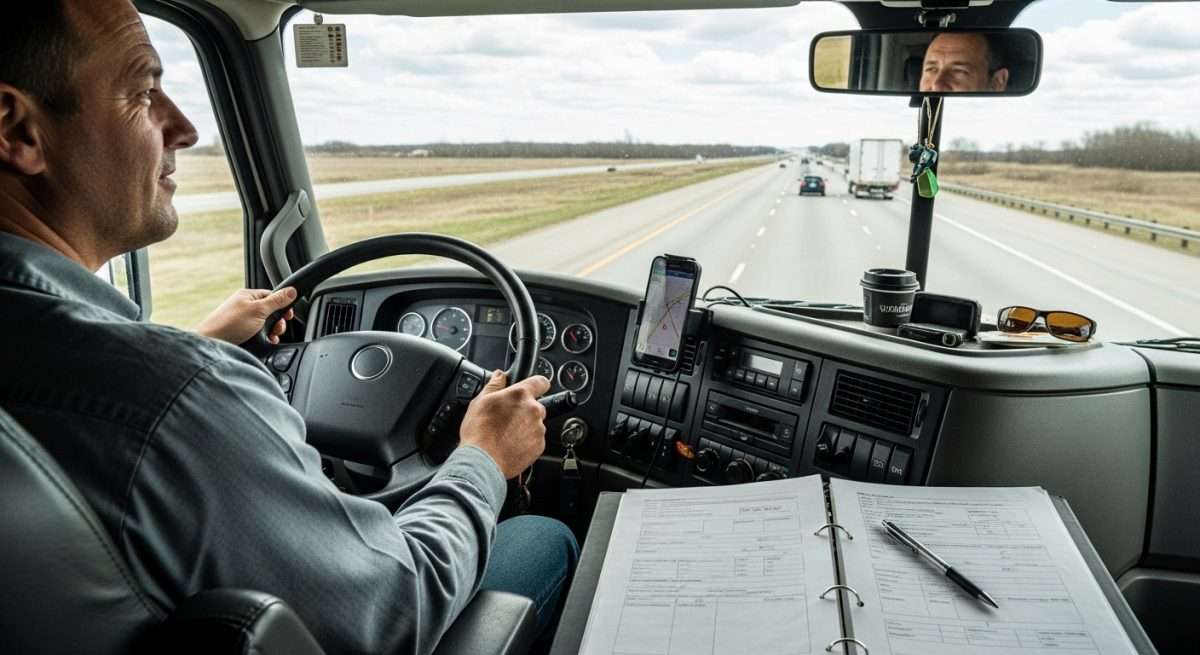
DOT Compliance · FMCSA · Owner-Operators If you’re an owner-operator who has received a DOT drug or alcohol violation, your CDL, and your entire business, is on the line. This guide covers every step of the DOT SAP program as it applies to you specifically in 2026: your dual employer-employee status, FMCSA Clearinghouse obligations, the return-to-duty process, costs, timelines, and the critical mistakes that keep owner-operators off the road longer than necessary. Key Takeaways Owner-operators are both the employer and the employee under DOT regulations, this dual status creates unique obligations in the SAP program that regular CDL drivers don’t face. You cannot self-administer drug testing; you must enroll with a Consortium/Third-Party Administrator (C/TPA) and manage your own Clearinghouse reporting as an employer. As of January 2, 2026, more than 200,000 CDL holders are in prohibited status, many are owner-operators who delayed starting the return-to-duty process. Under FMCSA Clearinghouse Phase II (effective November 2024), your CDL is physically downgraded by your state DMV when you are in prohibited status. The minimum follow-up testing obligation after completing the SAP program is six unannounced observed tests in the first 12 months, with up to five years of continued testing. A new DOT proposed rule (Sept. 2025) would add fentanyl to the 5-panel drug test, expect this change to take effect in 2026. What Is the DOT SAP Program? The DOT SAP (Substance Abuse Professional) program is a federally mandated return-to-duty (RTD) process established under 49 CFR Part 40, Subpart O. It applies to anyone performing safety-sensitive functions under a DOT-regulated agency, including the FMCSA, FAA, FRA, FTA, PHMSA, and USCG, who violates drug and alcohol testing regulations. For owner-operators specifically, this means: if you hold a Commercial Driver’s License (CDL) and fail a DOT drug test, test positive for alcohol at or above 0.04, refuse to test, or commit any other violation listed under 49 CFR Part 382, Subpart B, you cannot legally operate a commercial motor vehicle (CMV) until you successfully complete the SAP program and pass a return-to-duty drug test. The program is centered on a Substance Abuse Professional (SAP), a licensed clinician who has met specific DOT qualification requirements. The SAP is a neutral evaluator whose job is to assess your situation, prescribe education or treatment, verify compliance, and ultimately determine whether you are safe to return to safety-sensitive work. Regulatory Authority: The DOT SAP program is governed by 49 CFR Part 40 (DOT procedures for drug and alcohol testing) and enforced through the FMCSA under 49 CFR Part 382 for commercial motor vehicle operators. For owner-operators, additional obligations under the FMCSA Drug and Alcohol Clearinghouse apply. What Triggers the SAP Program? Any of the following events will place you in the SAP process and flag your Clearinghouse status as “Prohibited”: A verified positive result on a DOT 5-panel drug test (marijuana/THC, cocaine, opiates, amphetamines/methamphetamines, or PCP) A blood alcohol concentration (BAC) of 0.04 or higher Refusal to submit to a required drug or alcohol test (including leaving the collection site, refusing to provide a specimen, or specimen adulteration) Alcohol use within four hours of performing safety-sensitive duties Using alcohol while on duty “Actual knowledge” violations, where an employer observes intoxicated behavior and issues a citation How the SAP Program Is Different for Owner-Operators The most important thing to understand is that you are both the employer and the employee under DOT regulations. This dual role creates obligations that go beyond what a standard CDL driver employed by a carrier faces. Owner-Operator Employer Duties: Enroll in a C/TPA random testing consortium Run pre-employment Clearinghouse full queries on yourself Run annual limited Clearinghouse queries Report violations promptly to the Clearinghouse Document and retain all testing records Manage follow-up testing plan through your C/TPA Report any follow-up violations to the Clearinghouse What Owner-Operators Cannot Do: Self-administer or self-manage drug testing Schedule your own random or follow-up tests Choose when or how follow-up tests are administered Switch SAPs once evaluation has begun Drive commercially while in prohibited status Ignore Clearinghouse reporting obligations as employer Choose a non-DOT-qualified substance abuse counselor Because you cannot self-test, the FMCSA requires all owner-operators to enroll with a Consortium/Third-Party Administrator (C/TPA). The C/TPA acts in the role of your employer’s drug and alcohol testing program manager, selecting you for random testing, notifying you of test requirements, and coordinating your testing logistics. The FMCSA does not endorse or certify specific C/TPAs, so it is your responsibility to identify and retain a qualified one. Important: CDL Downgrade Under Clearinghouse Phase II: Effective November 18, 2024, State Driver Licensing Agencies (SDLAs) are required to downgrade your CDL to a non-commercial license within 60 days of receiving notification that you are in “Prohibited” status in the FMCSA Clearinghouse. This means you physically lose your commercial driving privileges, not just your ability to be employed as a driver, until you complete the return-to-duty process. As of January 2, 2026, more than 200,000 CDL holders are in prohibited status. Drug Testing Requirements for Owner-Operators in 2026 The 5-Panel DOT Drug Test All CDL drivers, including owner-operators, are subject to a DOT 5-panel urine drug test that screens for the following substances: Marijuana (THC/Cannabinoids): Remains the #1 cause of CDL violations. In the first half of 2025 alone, marijuana accounted for over 16,746 positive tests, roughly 60% of all drug violations in the Clearinghouse. Cocaine: The second most common violation, with 4,484 positive tests year-to-date in mid-2025. Opiates: Including heroin, morphine, oxycodone, and hydrocodone. Amphetamines/Methamphetamines: 2,107 positive tests for methamphetamine and 1,800 for amphetamines (including some from prescribed ADHD medication like Adderall without proper MRO verification). Phencyclidine (PCP) 2026 Update Fentanyl Proposed to Be Added: The DOT published a proposed rule in the Federal Register on September 2, 2025 (FR-2025-16720) that would add fentanyl and norfentanyl to the required DOT drug testing panel. The final rule is expected to take effect in 2026. Owner-operators should expect the standard drug test to expand to a 7-panel screen. Types of Testing That Apply to Owner-Operators As both employer and employee, you are subject to all of the following testing categories: Pre-employment
Online SAP Evaluation: Is It DOT Legal in 2026?

As we enter 2026, more industries and services are transitioning to online platforms, and the world of substance abuse evaluations is no exception. For drivers who have violated DOT regulations (such as testing positive for drugs or alcohol), the Substance Abuse Professional (SAP) evaluation is a critical step in returning to work. But with the rise of telemedicine and online services, many are asking: Is online SAP evaluation DOT legal in 2026? In this article, we’ll explore the legalities, benefits, and considerations of completing an online SAP evaluation in 2026, particularly within the framework of the DOT (Department of Transportation) regulations. Table of Contents What is an SAP Evaluation? Why is the SAP Evaluation Important for DOT Compliance? Can You Complete an SAP Evaluation Online? DOT Guidelines on Online SAP Evaluations Benefits of Online SAP Evaluations Challenges and Considerations of Online SAP Evaluations The Role of SAP Valuate in Online Evaluations FAQ Section Conclusion What is an SAP Evaluation? An SAP (Substance Abuse Professional) evaluation is a crucial part of the DOT Substance Abuse Program. If a commercial driver violates DOT drug and alcohol regulations, they must undergo a comprehensive evaluation by an SAP. The purpose of this evaluation is to assess the severity of the substance abuse issue, recommend appropriate treatment or counseling, and clear the driver to return to safety-sensitive duties once they have met the necessary requirements. After successfully completing treatment or counseling, the SAP will issue a Return-to-Duty (RTD) recommendation, allowing the driver to resume their driving responsibilities. Why is the SAP Evaluation Important for DOT Compliance? The DOT SAP evaluation is a federally mandated process. For commercial drivers who have violated alcohol or drug regulations, this evaluation ensures that they are fit to return to work in a safe and compliant manner. Failure to undergo an SAP evaluation could lead to an extended suspension or disqualification from commercial driving. Since the SAP evaluation is a formal requirement for return-to-duty status, it must adhere to DOT guidelines to ensure that the process remains legally compliant. Can You Complete an SAP Evaluation Online? With the growing popularity of online services, you may be wondering whether it’s possible to complete an SAP evaluation online. The short answer is yes—in 2026, online SAP evaluations can be DOT-compliant if conducted properly. In response to the ongoing needs for remote services and the adoption of telehealth practices, the DOT has allowed for virtual evaluations under specific circumstances. However, not all online evaluations meet DOT standards. The SAP must be a licensed professional and the evaluation process must follow all the necessary steps required by the DOT. Here’s what you should know: DOT-compliant SAP evaluations can be done remotely if the SAP is licensed and the evaluation is conducted in a secure, private, and professional manner. The evaluation must still include all the necessary assessments, interviews, and documentation as required by DOT regulations. SAP evaluations conducted online must be in real-time (live) rather than pre-recorded or automated. DOT Guidelines on Online SAP Evaluations While the DOT has given the green light for virtual evaluations in some cases, there are important guidelines that must be followed: Licensed SAP: The SAP conducting the evaluation must be licensed and have the proper credentials to perform the evaluation. Whether the evaluation is done in person or online, the professional qualifications of the SAP are critical to maintaining DOT compliance. Secure and Confidential: Online SAP evaluations must take place on secure platforms that protect the confidentiality of the driver’s personal and medical information. Platforms used for online evaluations must comply with HIPAA (Health Insurance Portability and Accountability Act) regulations, ensuring that no private information is exposed. Real-Time Interaction: Evaluations must be conducted in real-time through video conferencing or other interactive methods. This allows the SAP to engage in a full evaluation, ensuring that the driver’s responses and behaviors are observed and assessed as they would be in an in-person session. Documentation: Proper documentation is essential. The SAP must generate a written report of the evaluation, which includes findings, recommendations, and a Return-to-Duty (RTD) recommendation, if applicable. This report must be submitted to the appropriate authorities in compliance with DOT guidelines. State-Specific Requirements: While the DOT has set federal guidelines, some states may have additional requirements or restrictions regarding online evaluations. Drivers and employers should always check with their state-specific regulations to ensure compliance. Benefits of Online SAP Evaluations Online SAP evaluations offer several advantages for both drivers and employers: Convenience: Drivers can attend evaluations from the comfort of their own home, avoiding travel and scheduling conflicts. Accessibility: Remote evaluations allow drivers who live in rural areas or places with limited access to SAPs to still comply with DOT regulations and return to work more quickly. Cost-Effective: Virtual evaluations can be more affordable for both drivers and employers since they eliminate travel and logistical costs associated with in-person evaluations. Safety: In light of the ongoing global health challenges, online evaluations offer a safer alternative to in-person meetings, reducing the risk of exposure to illnesses. Challenges and Considerations of Online SAP Evaluations While online SAP evaluations offer several benefits, there are some challenges to consider: Technical Issues: Reliable internet connections and access to the necessary technology are required. Any technical problems during the evaluation could delay the process or invalidate the evaluation. Limited Personal Interaction: While video conferencing allows real-time interaction, it may still lack some of the interpersonal cues available during face-to-face meetings. This could impact the SAP’s ability to fully assess the driver’s situation. Platform Security: It’s essential to use a secure, DOT-approved platform to ensure confidentiality. Drivers and employers should verify the security measures taken by the SAP and the platform to protect sensitive information. Not All SAPs Offer Online Evaluations: Not all SAP professionals are equipped to conduct online evaluations. Drivers may need to find an SAP provider that offers virtual services. The Role of SAP Valuate in Online Evaluations At SAP Valuate, we are committed to providing DOT-compliant online SAP evaluations to drivers
What Happens If I Miss the RTD Test?

If you are a commercial driver subject to the DOT (Department of Transportation) regulations, you likely know that after a substance abuse violation, you must complete a Return-to-Duty (RTD) test before getting back on the road. But what happens if you miss this crucial test? Will it delay your ability to return to work, or are there other consequences? In this article, we’ll break down everything you need to know about the RTD test, what missing it means for your career, and the steps you can take to get back on track. Table of Contents What is the RTD Test? Why is the RTD Test Important? What Happens If You Miss the RTD Test? Consequences of Missing the RTD Test Can You Reschedule the RTD Test? How to Avoid Missing the RTD Test The Role of the SAP in the RTD Process FAQ Section Conclusion What is the RTD Test? The Return-to-Duty (RTD) test is a critical part of the DOT Substance Abuse Program (SAP) for commercial drivers. After a driver has violated substance abuse regulations (e.g., testing positive for alcohol or drugs), they must complete an evaluation and treatment program as prescribed by a Substance Abuse Professional (SAP). Once the driver has successfully completed the necessary treatment or counseling, they must undergo an RTD test to confirm that they are no longer under the influence of drugs or alcohol and are fit to return to their duties as a commercial driver. Why is the RTD Test Important? The RTD test serves as an assurance that a driver is no longer impaired and has met all of the necessary treatment or counseling requirements before returning to commercial driving. Without passing this test, a driver cannot legally resume their job in safety-sensitive positions, which include operating large commercial vehicles. Missing the RTD test can delay your return to work and may even trigger a longer suspension period, depending on the circumstances and DOT regulations. What Happens If You Miss the RTD Test? If you miss the Return-to-Duty test, several things can happen: Delays in Return to Work: Missing the RTD test means you will not be able to return to your job until you reschedule and pass the test. This can cause significant delays in your employment, which may affect your financial situation. Violation of DOT Regulations: Missing the test is considered a violation of DOT regulations, which may extend your suspension period. Commercial drivers are required to comply with these rules, and non-compliance can result in penalties or further delays. Further Evaluation or Treatment: Depending on the circumstances, the SAP may require additional treatment, counseling, or follow-up evaluations before you can attempt the RTD test again. This is done to ensure that you are fully prepared to return to work and meet DOT’s safety standards. Consequences of Missing the RTD Test The consequences of missing the RTD test can be far-reaching. Some of the possible consequences include: Ineligibility to Return to Work: Without passing the RTD test, you cannot return to driving a commercial vehicle. This can lead to an extended time away from work, which may hurt your career and income. Extended Suspension Period: Missing the RTD test could potentially extend your suspension period, depending on the specific circumstances. In some cases, the driver may need to restart the entire substance abuse evaluation process and meet all the requirements again before taking the RTD test. Impact on Your Career: Frequent delays or failure to comply with DOT regulations may hurt your professional reputation. Employers rely on drivers who are fully compliant with regulations, and any missed tests or delays may affect future job prospects. Additional SAP Involvement: If you miss the RTD test, your Substance Abuse Professional (SAP) will need to be involved in determining the next steps, which may include more evaluation, counseling, or monitoring before you can proceed with the testing. Can You Reschedule the RTD Test? Yes, you can typically reschedule the RTD test if you miss the original date. However, rescheduling does not absolve you from the consequences of missing the test. Here’s what you should do: Contact the Testing Facility: Immediately reach out to the testing facility or medical review officer (MRO) that oversees your RTD test. Explain the situation and inquire about available dates to reschedule the test. Inform Your Employer: If you missed the RTD test, notify your employer or the relevant parties involved in your return-to-duty process. Transparency is key to maintaining trust and ensuring that the process moves forward as smoothly as possible. Confirm SAP Involvement: You may need to involve your SAP to confirm that you have completed any additional requirements, such as further treatment or counseling, before you are eligible to retake the RTD test. Follow DOT Guidelines: Be sure to follow all DOT guidelines and regulations when rescheduling and retaking the RTD test. Missing any steps could delay your return to work even further. How to Avoid Missing the RTD Test To avoid the issues that come with missing your RTD test, consider these tips: Set a Reminder: As soon as your RTD test is scheduled, set multiple reminders on your phone, calendar, or planner. This will help ensure you don’t forget the test date. Prepare in Advance: Ensure you meet all the requirements leading up to the test, such as completing necessary evaluations, treatment sessions, or counseling. This will help avoid any delays or complications on the day of your test. Maintain Open Communication: Keep the lines of communication open with your SAP, employer, and testing facility. If you have any concerns or foresee potential conflicts, speak up ahead of time to prevent issues. Don’t Wait Until the Last Minute: Plan ahead and avoid procrastination. Last-minute changes to your schedule can increase the likelihood of missing your test. The Role of the SAP in the RTD Process The Substance Abuse Professional (SAP) plays a vital role in the RTD process. After a substance abuse violation, the SAP evaluates your condition, recommends treatment or counseling, and
What is the Difference Between a CDL and a Non-CDL Driver?

Driving a commercial vehicle in the United States is subject to a variety of regulations and requirements, especially when it comes to the type of driver’s license you need. Two key categories of licenses are CDL (Commercial Driver’s License) and non-CDL licenses. But what exactly differentiates the two, and why does it matter? In this article, we will break down everything you need to know about CDLs and non-CDL licenses, from the requirements and the types of vehicles you can drive to the training and qualifications needed. Let’s dive in and answer all your questions about these important driving classifications! What is a CDL? A Commercial Driver’s License (CDL) is a specialized driver’s license required to operate larger, heavier vehicles or vehicles that transport hazardous materials or large numbers of passengers. CDL holders are allowed to drive semi-trucks, buses, large delivery trucks, and other vehicles that exceed certain size and weight limits set by the Federal Motor Carrier Safety Administration (FMCSA). CDLs are issued in different classes depending on the type of vehicle and the weight category: Class A CDL: For driving combination vehicles (e.g., tractor-trailers). Class B CDL: For driving single vehicles with a gross vehicle weight rating (GVWR) of 26,001 pounds or more. Class C CDL: For smaller vehicles that transport hazardous materials or 16+ passengers. Obtaining a CDL requires passing a series of written and practical tests, along with meeting certain medical and age requirements. What is a Non-CDL License? A non-CDL license is the standard driver’s license that most individuals in the U.S. hold. This type of license allows you to operate smaller vehicles that fall under certain weight and size thresholds. Non-CDL drivers can operate passenger cars, small trucks, motorcycles, and some other vehicles that are not classified as commercial. In general, a non-CDL license is sufficient for personal, non-commercial driving. If you’re driving a vehicle for personal use, a non-CDL is all you need. Key Differences Between CDL and Non-CDL Drivers 1. Vehicle Weight and Size CDL Drivers: CDL drivers can operate vehicles that exceed a gross vehicle weight rating (GVWR) of 26,001 pounds. This includes vehicles like semi-trucks, large delivery trucks, and buses. Non-CDL Drivers: Non-CDL drivers are typically limited to vehicles under 26,000 pounds GVWR. These are usually cars, small trucks, and vans. 2. Types of Vehicles You Can Drive CDL Drivers: With a CDL, drivers can operate commercial vehicles like: Semi-trucks (Class A) Large delivery trucks (Class B) Buses and passenger transport vehicles (Class C) Vehicles carrying hazardous materials or more than 15 passengers Non-CDL Drivers: Non-CDL drivers can operate: Standard cars and small trucks RVs and vehicles under 26,000 pounds GVWR Small trailers or equipment haulers that don’t exceed weight restrictions 3. Licensing Requirements CDL Drivers: Obtaining a CDL is more involved than a non-CDL license. Requirements include: Passing written exams covering road signs, regulations, and driving skills Completing a road skills test (with the vehicle you intend to drive) Undergoing a medical exam to ensure you are fit to drive large vehicles Some states may require a certain age (usually 21 years old or older) Non-CDL Drivers: A non-CDL license is much easier to obtain. Requirements generally include: Passing a written exam on road signs and driving rules Completing a road test (in a passenger vehicle) Meeting the minimum age requirement (typically 16 or 18 years old depending on the state) When Do You Need a CDL? You’ll need a CDL if: You drive a vehicle over 26,000 pounds GVWR. You operate a combination vehicle (e.g., a truck pulling a trailer that exceeds the weight limit). You carry hazardous materials or drive vehicles transporting 16 or more passengers. Even if the vehicle you’re driving falls under the weight limit for a CDL, it’s important to note that if you’re transporting certain hazardous materials, you’ll need specialized endorsements to legally operate the vehicle. How to Obtain a CDL Obtaining a CDL involves several key steps: Obtain a Commercial Learner’s Permit (CLP): This is the first step and allows you to practice driving a commercial vehicle. Complete CDL Training: Many states require you to complete a state-approved training program. While not mandatory in every state, it’s highly recommended to ensure you are fully prepared. Pass the Written Exam: The written exam will cover the rules and regulations for driving large vehicles. Pass the Skills/Driving Test: This test evaluates your ability to safely operate a commercial vehicle. Submit Medical Documentation: You’ll need to pass a physical exam from an approved doctor to ensure you are medically fit to drive a commercial vehicle. Receive Your CDL: Once you pass all tests, you’ll receive your CDL. You may also need additional endorsements depending on the type of vehicle you wish to drive (e.g., a tanker endorsement or a passenger endorsement). FAQ Section 1. What does CDL stand for?CDL stands for Commercial Driver’s License, a special license required to drive large or commercial vehicles. 2. Can I drive a large truck with a non-CDL license?No, if the vehicle exceeds 26,000 pounds in GVWR, you will need a CDL. 3. What is the weight limit for non-CDL vehicles?Non-CDL vehicles are typically those under 26,000 pounds GVWR. 4. Do I need a CDL to drive a school bus?Yes, a CDL with a passenger endorsement is required to drive a school bus. 5. Can non-CDL drivers drive trailers?Yes, non-CDL drivers can tow trailers, as long as the total vehicle weight does not exceed 26,000 pounds. 6. How long does it take to get a CDL?The process typically takes several weeks to months, depending on the training program and testing requirements. 7. Is a CDL required to drive a delivery van?If the delivery van’s weight is under 26,000 pounds, no CDL is required. However, larger commercial delivery trucks do require one. 8. What is the age requirement for a CDL?Generally, you must be at least 21 years old to obtain a CDL to drive interstate. 9. Can I drive a commercial vehicle without a CDL for personal use?No,
Legal Consequences of Ignoring the DOT SAP Program 2026
For commercial drivers, compliance with DOT regulations is not optional. One of the most critical requirements is the Substance Abuse Professional (SAP) program, mandated for drivers who fail or refuse DOT drug and alcohol tests. Ignoring the SAP program can have serious legal, financial, and career consequences, yet many drivers underestimate the risks. In 2026, federal regulations remain strict, and CDL drivers must fully understand the implications of non-compliance. This article will break down the legal consequences of ignoring the DOT SAP program, explain why compliance matters, and highlight affordable ways to complete the process with services like SAPvaluate, which offers some of the cheapest DOT SAP programs online. Understanding the DOT SAP Program The DOT SAP program is a federally mandated process designed to evaluate, educate, and, if necessary, treat CDL drivers after a DOT violation. Violations include: Failing a DOT drug test Failing a DOT alcohol test with a blood alcohol concentration of 0.04 or higher Refusing to submit to a required test Submitting an adulterated or substituted sample The SAP program is not optional. Completion is mandatory for any driver wishing to return to safety-sensitive duties. Steps in the DOT SAP Process Initial Evaluation: A certified Substance Abuse Professional reviews your testing history, substance use, and risk factors. Recommendations: Based on your evaluation, the SAP may recommend education, counseling, or treatment. Completion of Recommendations: Drivers must complete all recommended programs, whether online, in-person, or through telehealth. Follow-Up Evaluation: The SAP assesses your progress and authorizes you for a return-to-duty test. Return-to-Duty Test: A negative drug or alcohol test is required to resume safety-sensitive work. Follow-Up Testing: Random testing continues for 1–5 years to ensure ongoing compliance. Legal Consequences of Ignoring the DOT SAP Program Failing to complete the SAP program can result in serious consequences under federal law. These consequences affect a driver’s ability to work, financial stability, and long-term career prospects. 1. Loss of Driving Privileges Ignoring the SAP program keeps a driver in prohibited status. While in prohibited status: You cannot operate a commercial vehicle in safety-sensitive positions. Employers are legally prohibited from hiring you. Prolonged non-compliance can even affect CDL renewal or eligibility. This can put your entire trucking career on hold. Drivers who delay the process may face months of lost income. 2. FMCSA Clearinghouse Penalties All DOT drug and alcohol violations are reported in the FMCSA Clearinghouse. Ignoring the SAP program can result in: A permanent record of non-compliance Automatic alerts to employers that you are prohibited from safety-sensitive work Increased scrutiny during audits or inspections Trying to work without completing the SAP program can be considered fraud or regulatory violation, which can escalate legal consequences. 3. Federal Fines and Civil Liability Operating a commercial vehicle without completing the DOT SAP program exposes drivers to: Federal fines under FMCSA regulations Potential civil liability in the event of an accident Legal action from employers or insurance companies if non-compliance contributed to an incident In extreme cases, persistent non-compliance can result in legal action that jeopardizes both your CDL and your personal finances. 4. Career and Financial Consequences Ignoring the SAP program can cause long-term career setbacks: Loss of income while prohibited from driving Difficulty obtaining future employment with trucking companies Damaged professional reputation Potential suspension or revocation of CDL The financial impact can be significant, especially for drivers who rely on trucking as their primary source of income. Why Compliance Is Critical in 2026 In 2026, regulations remain unchanged in terms of the mandatory SAP program, but enforcement is stricter than ever. DOT audits and FMCSA Clearinghouse checks ensure that: Employers verify driver compliance before hiring DOT records accurately reflect safety-sensitive status Non-compliance is detected quickly, leaving no room for oversight Complying with the SAP program not only restores legal driving privileges but also protects your career and income. Common Mistakes Drivers Make Ignoring or mishandling the SAP program is often unintentional. Some common mistakes include: Choosing a non-DOT substance abuse evaluation that is not recognized by the FMCSA Delaying the initial SAP evaluation due to cost or scheduling conflicts Failing to complete recommended treatment or counseling Not scheduling return-to-duty testing promptly These mistakes can result in prolonged prohibited status and escalate legal consequences. Affordable SAP Programs for 2026 Cost is one of the main reasons drivers delay completing the SAP program. Fortunately, affordable and DOT-compliant options exist. SAPvaluate provides one of the cheapest DOT SAP programs online and offers: FMCSA-certified telehealth SAP evaluations Nationwide availability Same-day or next-day scheduling Quick return-to-duty documentation Transparent pricing with installment options Using affordable providers ensures drivers can complete the SAP program quickly, avoid legal consequences, and resume their trucking career without financial stress. Steps to Avoid Legal Consequences Start the SAP Program Immediately: Delaying the process keeps you in prohibited status and increases career risk. Choose a Certified Provider: Only FMCSA-certified SAPs can legally evaluate DOT violations. Follow All Recommendations: Complete education, counseling, or treatment programs without skipping steps. Schedule Return-to-Duty Testing Promptly: A negative test is required to resume safety-sensitive duties. Maintain Records: Keep copies of all SAP documents to prove compliance if requested by employers or regulators. The Bottom Line Ignoring the DOT SAP program in 2026 can have devastating consequences for CDL drivers. Legal repercussions include loss of driving privileges, FMCSA Clearinghouse penalties, federal fines, and civil liability. Career consequences include loss of income, difficulty obtaining employment, and potential CDL suspension. Compliance protects drivers, restores legal eligibility, and ensures career continuity. Affordable, certified providers like SAPvaluate make it easier than ever to complete the DOT SAP program, offering one of the cheapest DOT SAP evaluations online and telehealth options to reduce downtime. Drivers who take the SAP program seriously can avoid legal issues, return to work safely, and secure their trucking careers for the future.
DOT SAP Program vs Non-DOT Substance Abuse Evaluations: What Drivers Must Know
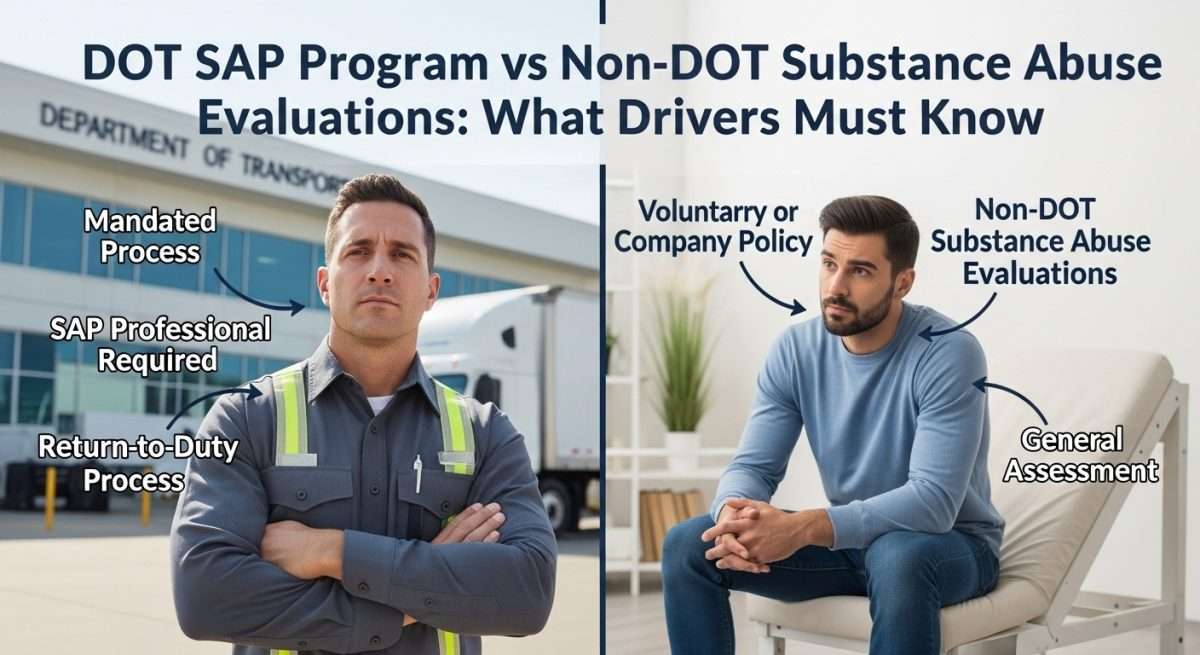
For commercial drivers, understanding the difference between DOT SAP programs and non-DOT substance abuse evaluations is critical. Choosing the wrong program can delay your return to work, affect your career, or even result in non-compliance with federal regulations. Whether you are facing a DOT violation or seeking guidance for substance abuse concerns, knowing the distinctions can save time, money, and stress. This guide explains the key differences, why DOT compliance matters, and how affordable programs like SAPvaluate can help drivers complete their DOT SAP evaluations quickly. What Is a DOT SAP Program A DOT SAP program is a federally regulated evaluation process for commercial drivers who have violated DOT drug or alcohol rules. CDL drivers are required to complete a Substance Abuse Professional evaluation if they: Fail a DOT drug or alcohol test Refuse to take a required DOT test Submit an adulterated or substituted sample The DOT SAP evaluation is mandatory for returning to duty in a safety-sensitive position. Only FMCSA-certified Substance Abuse Professionals can perform these evaluations. The DOT SAP process includes several steps: Initial assessment and evaluation of your substance use history Recommendations for education, counseling, or treatment Completion of recommended programs Follow-up evaluation and authorization for return-to-duty testing Ongoing follow-up tests as directed by the SAP Completing this process ensures compliance with FMCSA regulations, legal eligibility to return to work, and a clear record in the FMCSA Clearinghouse. What Are Non-DOT Substance Abuse Evaluations Non-DOT substance abuse evaluations are typically used for general healthcare, personal treatment, or insurance purposes. These evaluations are not regulated by the FMCSA or DOT and are not intended for drivers who need to return to a DOT safety-sensitive role. Non-DOT evaluations may be useful for personal recovery or workplace programs that are not DOT-regulated. However, they cannot replace a DOT SAP evaluation for commercial drivers. Using a non-DOT evaluation for DOT compliance may result in: Ineligibility to return to DOT-regulated driving Delays in obtaining your CDL or clearance Non-compliance issues with your employer It is important to understand that DOT SAP programs and non-DOT evaluations are not interchangeable. Drivers facing a DOT violation must follow the federally mandated SAP process to regain driving privileges. Key Differences Between DOT SAP and Non-DOT Evaluations Certification and Regulation DOT SAP programs are conducted by FMCSA-certified professionals, while non-DOT evaluations can be performed by licensed counselors without DOT certification. Purpose DOT SAP evaluations are specifically designed for CDL drivers returning to safety-sensitive positions. Non-DOT evaluations focus on personal treatment or general workplace compliance. Legal Requirement Completion of a DOT SAP evaluation is mandatory for return-to-duty in DOT-regulated roles. Non-DOT evaluations are optional and do not meet federal return-to-duty requirements. Documentation DOT SAP programs provide official documentation recognized by employers and recorded in the FMCSA Clearinghouse. Non-DOT evaluations do not provide DOT-compliant documentation. Follow-Up Testing DOT SAP programs include follow-up testing requirements ranging from 1 to 5 years. Non-DOT evaluations usually do not require follow-up testing. Why DOT SAP Compliance Matters for Drivers Failing to complete a DOT SAP evaluation after a DOT violation can have serious consequences: You cannot legally operate a commercial vehicle in a safety-sensitive role Employers are required to check the FMCSA Clearinghouse and cannot hire drivers in prohibited status Delays in completing the SAP program can result in lost income and career setbacks Following the DOT SAP program ensures that drivers meet federal requirements, regain eligibility to drive, and rebuild their career efficiently. Affordable DOT SAP Programs for Drivers One common concern for drivers is cost. Some SAP programs charge hundreds or thousands of dollars, making it difficult for drivers to complete the process promptly. Platforms like SAPvaluate offer one of the cheapest DOT SAP programs online, providing: DOT-compliant SAP evaluations by certified professionals Nationwide access through telehealth Fast scheduling and same-day documentation Transparent pricing and installment options With affordable services, drivers can complete the DOT SAP process without unnecessary financial stress and return to work faster. Tips for Drivers Choosing the Right Evaluation Always verify that your SAP provider is FMCSA-certified for DOT evaluations. Avoid non-DOT evaluations if your goal is to return to a DOT-regulated position. Choose a provider that offers telehealth options for convenience and faster processing. Complete all recommended education, counseling, or treatment programs promptly. Schedule your return-to-duty test immediately after your SAP authorization to avoid delays. Conclusion Understanding the difference between DOT SAP programs and non-DOT substance abuse evaluations is essential for CDL drivers. A non-DOT evaluation cannot replace a federally mandated DOT SAP program. Completing a DOT SAP evaluation ensures compliance with FMCSA regulations, eligibility to return to work, and long-term career security. Affordable and reliable services like SAPvaluate make it easier for drivers to complete DOT SAP programs online, saving time and money while following federal rules. Drivers who choose the right SAP program can rebuild their careers with confidence and return to the road legally and safely.
Telehealth SAP Evaluations: Are They Accepted by FMCSA & DOT?
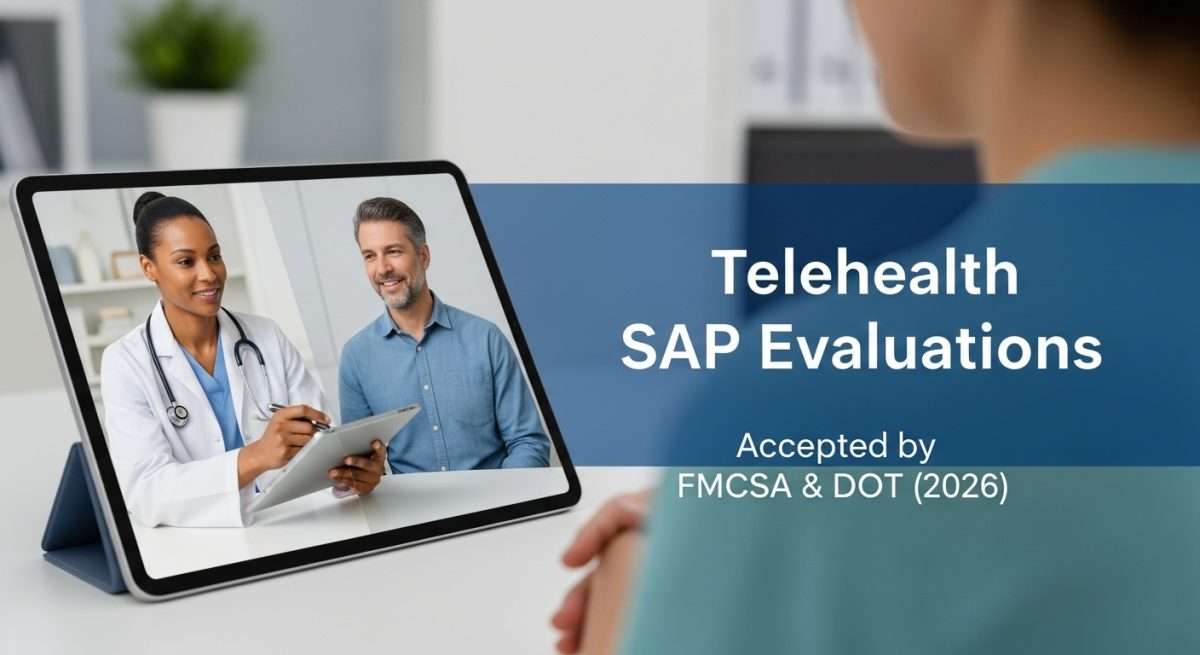
In today’s fast-paced trucking industry, CDL drivers face strict regulations regarding substance use. Failing a DOT drug or alcohol test can put your career on hold, but thankfully, the Substance Abuse Professional (SAP) program exists to help drivers return to work safely and legally. With the rise of telehealth, many drivers are asking: “Are telehealth SAP evaluations accepted by the FMCSA and DOT?” The short answer is yes, but there are important details every driver should know. In this comprehensive guide, we’ll explore telehealth SAP evaluations, FMCSA and DOT regulations, the benefits of remote assessments, potential limitations, and how affordable online providers like SAPvaluate can help you complete the process quickly and cost-effectively. What Is a Telehealth SAP Evaluation? A telehealth SAP evaluation is a remote assessment that allows CDL drivers to complete their DOT-mandated substance abuse evaluation via video conferencing, rather than traveling to an in-person office. The evaluation process is designed to meet all federal requirements and includes: Reviewing drug or alcohol testing history Assessing substance use patterns and risk factors Recommending education, counseling, or treatment if necessary Issuing documentation for the return-to-duty process Telehealth evaluations offer drivers flexibility, accessibility, and often a more affordable alternative to traditional in-person SAP assessments. FMCSA & DOT Acceptance of Telehealth SAP Evaluations The Federal Motor Carrier Safety Administration (FMCSA) and the Department of Transportation (DOT) have confirmed that telehealth SAP evaluations are accepted—provided the evaluation is conducted by a certified and compliant professional. Key Requirements: Certified SAP OnlyOnly FMCSA-certified Substance Abuse Professionals are authorized to conduct evaluations. This applies whether the evaluation is in-person or via telehealth. Secure TechnologyTelehealth platforms must be HIPAA-compliant to protect driver privacy and meet federal standards. Comprehensive EvaluationRemote evaluations must fully review the driver’s history, risk factors, and test results—just like in-person assessments. Proper DocumentationTelehealth SAPs can issue official return-to-duty recommendations, which are accepted by employers and recorded in the FMCSA Clearinghouse. In other words, telehealth is legally valid and recognized by regulators, as long as it adheres to federal guidelines. Why Telehealth SAP Evaluations Are Becoming Popular Telehealth SAP evaluations have surged in popularity among CDL drivers for several reasons: 1. Convenience and Flexibility Drivers can complete the evaluation from home, a hotel, or on the road, reducing travel time and logistical hassles. 2. Faster Scheduling Many telehealth providers offer same-day or next-day appointments, helping drivers start their return-to-duty process without unnecessary delays. 3. Cost Savings Telehealth evaluations often cost significantly less than in-person assessments, making it more accessible to drivers who are out of work due to a DOT violation. Providers like SAPvaluate offer some of the cheapest DOT SAP programs online, without sacrificing compliance or quality. 4. Nationwide Access Telehealth allows drivers across the country to access certified SAPs, even in areas with limited in-person providers. Step-by-Step Guide to Telehealth SAP Evaluations Telehealth evaluations follow the same return-to-duty steps as traditional in-person SAP programs. Step 1: Initial SAP Evaluation A certified SAP reviews your test results, substance use history, and personal risk factors. The evaluation is conducted securely over video. Step 2: Recommendations The SAP may recommend: Educational sessions Counseling or therapy Treatment programs Participation in support groups Drivers must complete all recommended steps before progressing. Step 3: Follow-Up Evaluation Once the educational or treatment recommendations are complete, the SAP conducts a follow-up assessment to verify compliance. Step 4: Return-to-Duty Testing Drivers must pass a return-to-duty drug or alcohol test. Telehealth SAPs coordinate with certified collection sites for testing. Step 5: Ongoing Follow-Up Testing After returning to work, the SAP may require unannounced follow-up tests over 1–5 years, depending on the severity of the violation. Potential Challenges with Telehealth SAP Evaluations While telehealth evaluations are widely accepted, drivers should be aware of a few considerations: Technology Issues: Internet connectivity problems or software glitches can disrupt the evaluation. Treatment Requirements: Certain cases may still require in-person counseling or treatment. Documentation: Make sure your telehealth SAP provides official, compliant documentation for employers and the FMCSA Clearinghouse. Despite these minor limitations, telehealth remains a fully valid and convenient option for drivers looking to complete their DOT SAP evaluation efficiently. How SAPvaluate Makes Telehealth SAP Evaluations Easy For many drivers, cost, accessibility, and speed are top priorities. SAPvaluate offers a DOT-compliant, affordable telehealth SAP program with features designed for convenience and efficiency: Cheapest DOT SAP programs online starting around $124 Nationwide access and remote scheduling Same-day or next-day appointments to reduce downtime Quick, official documentation for return-to-duty compliance HIPAA-compliant video platform for secure evaluations By using SAPvaluate, drivers can complete the SAP evaluation without breaking the bank and return to work faster. Tips for a Smooth Telehealth SAP Evaluation Prepare Your Documentation – Have your DOT test results, prior medical records, or any related documentation ready. Choose a Certified SAP – Verify that the provider is FMCSA-certified. Ensure Privacy – Conduct the evaluation in a private space with no distractions. Follow Recommendations Closely – Completing counseling or educational programs promptly ensures faster return-to-duty. Schedule Your Return-to-Duty Test Early – Coordinate with a certified testing site as soon as the SAP gives the green light. The Bottom Line Telehealth SAP evaluations are accepted by FMCSA and DOT when conducted by certified professionals and using secure, compliant platforms. They offer: Flexibility for drivers on the road Cost-effective solutions for those facing financial constraints Faster scheduling and quicker return-to-duty processing Nationwide access regardless of your location With affordable and reliable providers like SAPvaluate, drivers can complete the cheapest DOT SAP programs online, satisfy federal requirements, and rebuild their trucking careers confidently. Telehealth SAP evaluations are not just a modern convenience, they are a legally recognized, effective pathway for CDL drivers to return to work safely and efficiently after a DOT violation.