schedule an appointement

SAPVALUATE
Call now: Current wait time: 0 min

Have questions or need assistance? Complete the form below to arrange a complimentary free consultation. Our team will contact you ASAP to discuss getting the restriction removed off your CDL or other safety sensitive position.
Get in touch
Average response time: 15 minutes
OR GIVE US A CALL (877) 926-1678
Speak with one of our RTD specialists now.
schedule an appointement
Get in touch
Average response time: 15 minutes
OR GIVE US A CALL (877) 926-1678
Speak with one of our RTD specialists now.
Offering same-day appointments.

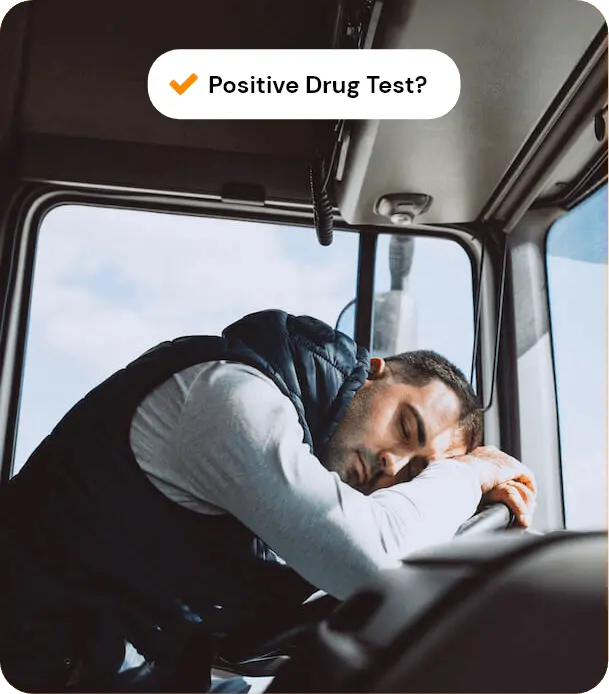
Are you a CDL holder, transportation specialist, or another individual in a safety-sensitive role facing a DOT violation, such as refusing or failing a drug test?
Dealing with unresolved issues can be demoralizing and stressful, especially when they threaten your career. It’s important to understand the seriousness of the violation, as it can have significant consequences. Our DOT SAP evaluation services are designed to guide you through this challenging process and help you find effective solutions. You don’t have to navigate this situation alone; we are here to support you every step of the way. You can communicate openly with our SAP Advisor throughout the process, as transparency is key to rebuilding trust.
Contact us to schedule your SAP evaluation and start the path to recovery and compliance. Call Now!
As of November 18, 2024, the Federal Motor Carrier Safety Administration requires State Driver Licensing Agencies to downgrade Commercial Driver’s Licenses and Commercial Learner’s Permits for drivers in a “prohibited” status due to drug or alcohol violations. This downgrade means the loss of commercial driving privileges until the driver completes the Return-to-Duty process.
Drivers are typically given a few weeks to complete the RTD process before the downgrade takes effect. The RTD process includes an evaluation by a Substance Abuse Professional and a negative return-to-duty test. Once the RTD process is successfully completed, drivers can restore their commercial driving privileges.
Step 1
You’ll meet with the substance abuse professional via Zoom, where he’ll gather information on your substance use history and evaluate your readiness for safety-sensitive duties
Step 2
Based on the evaluation, The SAP creates a personalized treatment or education plan customized to your needs, ensuring it aligns with DOT regulations.
Step 3
After you complete the recommended treatment or education, The SAP conducts a follow-up evaluation to ensure your readiness to return to duty.
Step 4
At the end of Step Four, The SAP files the compliance report with the Clearinghouse and notifies your employer. This update confirms your compliance and changes your status to “retest eligible.” A final “return to duty
(RTD) drug test” is required before you’re cleared to return to safety-sensitive work.
Step 5
Once you complete the SAP process and are determined “retest eligible”, the next step is to complete the Return-to-Duty drug test.
As soon as you pass the Return-to-Duty test, you will be removed from prohibited status and allowed to return to safety-sensitive duties.
Your employer is responsible for setting up the test and filing it in the Clearinghouse.
If you don’t have an employer yet, you can use a third-party administrator (C/TPA) to complete the test independently. We can assist and connect you with a provider if needed.
Step 6
Once you are back at work, Step 6 involves completing a series of random follow-up drug tests to ensure ongoing compliance with DOT regulations.
If you find yourself in a situation where a DOT drug test doesn’t go as planned, we’re here to help you with the return-to-duty process. As a small, owner-operated
company, we provide friendly and professional customer service to anyone who calls us with questions about their SAP violation. You can rely on us for all your cheapest dot sap program evaluations through our full-service approach in the US.
While we do offer SAP evaluations, our main goal is to educate and support you throughout the process, whether you choose to use our services. You already
understand that having some compliance with the DOT rules is complicated, so we will do everything to ensure that procedures are made as simple as they can be, offering the cheapest sap program that delivers the best value and results.
We have successfully helped hundreds of drivers regain their jobs, and we can do the same for you.

We provide SAP evaluations conducted by a qualified Substance Abuse Professional (SAP), following DOT guidelines for safety-sensitive employees. This evaluation is the first step in helping you comply with DOT regulations and get back to work.
Based on your SAP evaluation, we'll develop a customized plan that meets DOT requirements. This plan ensures you complete any necessary treatment or education before returning to safety-sensitive duties.
You don’t have to have a confirmed issue with drugs to go through the SAP program. The goal of the process is to assess whether substance abuse is a concern and to make sure you are in good standing with DOT regulations and the clearinghouse.
Completing your SAP evaluation opens the door to a supportive and efficient process. We can help you achieve your goals while ensuring a positive experience. Trust us to provide the resources you need for a successful outcome.
to navigate the SAP process.
We offer the lowest prices around. Our SAP Evaluation DOT program is easy on your wallet!
to ensure a smooth return to duty.
environment for a comfortable experience.
Get your SAP Evaluation done fast so you can get back on route ASAP!
for successful reintegration.


schedule an appointement
Our DOT Qualified SAP evaluator delivers thorough assessments to ensure you meet DOT regulations while effectively guiding you through the return-to-duty process.
With our SAP consulting services, you’ll receive personalized support and valuable insights to address any questions or concerns. Whether you’re seeking assistance as an individual or an employer, SAPvaluate is here to provide the best SAP assessments and consulting services that ensure your success.
We help key roles, such as:





Our DOT SAP program costs $499. This one-time fee covers everything you need: a complete evaluation, a tailored return-to-duty plan, and all the paperwork required to help you comply with DOT regulations successfully.

Our SAP program is designed to help and support drivers on their path to DOT compliance, making it easier to follow DOT regulations. By focusing on important recovery and compliance steps, SAPvaluate helps drivers safely get back on the road while ensuring they meet all regulations.
























This SAP program got it done way quicker than I expected. At first I thought my CDL would be restricted for months but they actually were able to get me unrestricted within a couple of days! Thank you for a great experience with your sap evaluation


Dakota McKenzie
Quickest and most affordable SAP program out there. Had a great experience – they do everything to get the restriction lifted as fast as possible. They work directly with the DOT clearinghouse for the SAP evaluation. Would recommend 10/10
Naomi Cohen
Honestly, if you’re reading this – save yourself the time shopping around, I already did it for you. This company provides the best value by far. I reached out to many others and after all the hidden fees they don’t tell you about until after you sign up, it ends up being much more.. This company is straight up, no games, responsive, professional, and got the job done fast.
Scott Shapiro
After getting into this mess I was dreading the SAP process, but Shirly made it surprisingly easy. She were there every step of the way, ensuring everything went smoothly. And great pricing as well! Happy to recommend them if anyone has any specific questions (537) 902-8194
Robert Sidman
A DOT Substance Abuse Professional (SAP) is a federally qualified clinician who evaluates and clears safety-sensitive transportation workers to return to duty after a failed or refused drug/alcohol test. SAPs are the only professionals the U.S. Department of Transportation authorizes under 49 CFR §40.281 to direct the Return-to-Duty (RTD) process for CDL drivers, pilots, mariners, transit operators, and railroad workers.
To qualify, a SAP must hold one of five DOT-approved credentials (LCSW, LPC, LMFT, licensed psychologist/physician, or NAADAC/ICRC-certified addiction counselor), complete DOT-specific training, and pass a national exam every three years. They do not treat the client — their legal job is to evaluate, prescribe education or treatment, and issue the compliance letter that unlocks your FMCSA Clearinghouse record.
Real Results: SAPvaluate has guided 10,000+ DOT-regulated workers through §40.281-compliant evaluations since 2016, with a 4.9-star rating across thousands of reviews and same-day appointment availability in all 50 states.
Takeaway: A SAP is not a therapist, rehab counselor, or HR contact — they are a federal gatekeeper. Without a SAP-signed letter on file, your Clearinghouse status stays “prohibited” and no DOT employer can legally let you drive, fly, or operate.
If you fail a DOT Return-to-Duty (RTD) drug or alcohol test, you are immediately re-flagged as “prohibited” in the FMCSA Clearinghouse and must restart the entire SAP process from step one. Under 49 CFR §40.285, any positive, adulterated, substituted, or refused test — including an RTD test — triggers a fresh violation that sits on your record for five years.
That means a new SAP evaluation, a new education or treatment recommendation, a new follow-up testing plan, and a new RTD test before you can return to safety-sensitive duty. Your existing follow-up schedule also resets, so any progress toward clearing your record is erased. Employers see the second violation in real time through the Clearinghouse query system.
Real Results: Roughly 1 in 8 workers who delay or rush their first SAP program fail their RTD test, according to FMCSA Clearinghouse annual reports — a second evaluation at SAPvaluate is $499 flat, the same as the first, with no “repeat client” surcharge.
Takeaway: A failed RTD test isn’t a setback — it’s a full reset of the federal clock. Taking the first SAP program seriously (and being honest about use history) is the single biggest predictor of passing on attempt one.
The active SAP program itself typically takes anywhere from a few days to a few weeks — the longer “full return-to-duty timeline” everyone quotes online includes the follow-up testing that happens after you’re already back at work and earning a paycheck. Every case is evaluated individually, because speed depends on how quickly you complete your prescribed education or treatment and pass the RTD test required under 49 CFR §40.305.
At SAPvaluate, most first-time, non-severe cases — straightforward alcohol or first-time marijuana violations, for example — can be cleared for RTD in as little as one week. Cases involving a clinical substance use disorder or a repeat lifetime violation take longer because the SAP must prescribe and verify structured treatment before signing off. Once RTD clearance is granted, the follow-up testing phase runs in the background (minimum 6 unannounced tests in the first 12 months per 49 CFR §40.307) while you’re already working.
Real Results: SAPvaluate is built around eliminating every source of downtime in the process: same-day appointment slots, virtual Zoom evaluations with no travel, instant digital intake and DER reporting, and flat-fee pricing so you never lose days chasing invoices or approvals. Every case is different, but the streamlined workflow is the same.
Takeaway: Don’t let someone quote you a rigid “X-week program” — a good SAP looks at your violation, your history, and your employer’s timeline individually. The question to ask is “How fast can my case realistically clear?” not “How long is your standard program?”
SAPvaluate conducts DOT SAP evaluations by secure Zoom video using any phone, tablet, or laptop with a camera and microphone — no app download or special software required. The FMCSA confirmed in 2023 that telehealth SAP evaluations fully satisfy 49 CFR Part 40 as long as the session is live, two-way, and conducted by a DOT-qualified SAP.
You receive a unique meeting link by email and text after booking. The initial evaluation covers substance-use history, the DOT violation, a structured clinical interview, and a face-to-face recommendation. The follow-up evaluation, back-to-work letter, and progress check-ins happen on the same Zoom link — no office visit, no travel, no time off work.
Real Results: Virtual SAPvaluate appointments book the same day 92% of the time, versus an average 2–3 week wait for in-person SAPs based on a sample of 500+ 2025 bookings. Clients in remote states like Alaska, Montana, and Wyoming save an average of $380 in travel costs per case.
Takeaway: The DOT does not require in-person — that’s an outdated myth some employers still repeat. A Zoom evaluation from a qualified SAP is legally identical to an office visit, and typically 2–3 weeks faster to schedule.
No — attending rehab, AA, NA, or a counselor on your own does not satisfy DOT requirements and will not clear you for Return-to-Duty. Under 49 CFR §40.289, only a DOT-qualified SAP can prescribe and then verify completion of the education or treatment that the Return-to-Duty process requires.
Self-directed treatment before a SAP evaluation is not wasted — SAPs often credit it toward the recommendation — but it cannot replace the evaluation itself. You still need the SAP’s initial evaluation, their specific prescribed plan, their follow-up evaluation, and their signed report to your designated employer representative (DER).
Real Results: Fewer than 3% of DOT violations are cleared without a SAP, according to FMCSA Clearinghouse data — and those cases involve retirement, permanent disqualification, or career changes out of safety-sensitive work.
Takeaway: Treatment heals you. A SAP’s letter is what the federal government requires to let you work. You need both, and the order matters: SAP first, treatment second, follow-up evaluation third.
Return-to-work speed depends entirely on your individual case — straightforward first-time violations at SAPvaluate can be cleared in as little as a week, while cases involving a clinical substance use disorder take longer. There is no federal minimum waiting period in 49 CFR §40.305 — you return to safety-sensitive duty as soon as the SAP signs your back-to-work letter and a negative RTD test is on file.
The fastest path: initial evaluation → education-only recommendation (common for first-time alcohol or first-time marijuana cases) → completion of DOT-approved education → follow-up evaluation → RTD test → back-to-work letter. Treatment-recommended cases add time because the SAP must verify meaningful progress before signing off. Every case is reviewed individually.
Real Results: SAPvaluate is built to eliminate every avoidable day of downtime — same-day appointment slots, virtual Zoom evaluations that skip travel entirely, instant digital intake, and same-day electronic reporting to your designated employer representative (DER) so nothing sits on a fax machine overnight.
Takeaway: The clock starts when you book the initial evaluation — not when your violation happened. A provider who can see you today and turn around the back-to-work letter within 24 hours of a clean RTD test can cut weeks off the timeline.
No — there is no free DOT SAP program, because SAPs are private clinicians and DOT prohibits employers, unions, or government agencies from paying them directly on your behalf. The federal rule in 49 CFR §40.11 treats SAP cost as a matter negotiated between employer and employee, not a government-funded benefit, to preserve clinical independence.
Market rates for a full DOT SAP program (initial evaluation + follow-up evaluation + report) typically run $500–$800, with some urban clinicians charging $1,200+. Watch out for low-advertised prices under $300 — they usually quote the initial evaluation only and add $200–$400 fees for the mandatory follow-up, face-to-face recommendation, or DER report.
Real Results: SAPvaluate charges a flat $499 for the complete program — both evaluations, all required reports, and the back-to-work letter included — or four interest-free installments of $124.75. That’s below the national average quoted by the Substance Abuse Program Administrators Association.
Takeaway: “Free SAP” searches almost always lead to scams or lead-gen pages selling your contact info. A legitimate flat-rate SAP that includes the follow-up in the quoted price is the closest thing to “free” this regulated market allows.
The fastest and simplest way to find a qualified DOT SAP is a DOT-telehealth provider like SAPvaluate that serves all 50 states by Zoom — proximity matters less than credentials, and a SAP 2,000 miles away on video is federally identical to one in your zip code. Under 49 CFR Part 40, what the DOT cares about is that your SAP holds a current DOT-approved license and passes the triennial exam — not their street address.
When vetting any “SAP near me,” confirm four things: (1) the provider is a qualified SAP (not just a counselor or therapist), (2) the flat price includes the follow-up evaluation, (3) they can issue a back-to-work letter within 24 hours of a clean RTD test, and (4) they directly report to your DER. Local listings, county mental-health boards, and employer referrals often fail one or more of these checks.
Real Results: SAPvaluate serves clients in all 50 U.S. states plus Puerto Rico and U.S. territories, with same-day availability in 92% of bookings and a 4.9-star average across thousands of reviews at sapvaluate.com.
Takeaway: The right question isn’t “Who’s closest?” — it’s “Who can see me today, charges a real flat fee, and has experience with my specific violation type?” Location is the least important variable in a virtual-first regulatory process.
A complete DOT SAP program costs $500–$800 on the open market, with SAPvaluate priced at $499 flat or 4 interest-free payments of $124.75. That single price covers both the initial and follow-up evaluations, all mandatory education/treatment referrals, the face-to-face recommendation, the back-to-work letter, and direct reporting to your designated employer representative.
What’s not included anywhere in the industry: the education or treatment itself (typically $20–$80 for an online course in simple cases where education is the recommendation — in-person treatment costs vary widely when clinically required), the RTD drug/alcohol test (negotiated between employer and employee under §40.305), and the follow-up drug tests after return to duty.
Real Results: In a 2026 price survey of 40 U.S. SAP providers, 72% used “bait pricing” (low initial fee, high follow-up fee). SAPvaluate’s all-inclusive $499 quote came in below the $625 national median and was one of only 11 providers quoting a single flat price with no follow-up surcharge.
Takeaway: Always ask “Does this price include the follow-up evaluation and the back-to-work letter?” If the answer is no, your real cost will likely double. A transparent flat fee is a proxy for a clinician who isn’t trying to maximize billable touchpoints.
Payment for the Return-to-Duty (RTD) drug and alcohol test is not federally mandated — it’s negotiated between the employer and the employee, and can also be governed by collective bargaining agreements, company policy, or health plan design. 49 CFR Part 40 and the DOT’s official Q&A guidance on §40.25 both confirm the rule is silent on who writes the check, leaving the arrangement to the parties involved.
In practice, policies vary widely — some employers absorb the cost as part of their hiring process, many union contracts require it, and plenty of drivers pay out of pocket as a condition of re-entering safety-sensitive work. The same flexibility applies to the 6+ unannounced follow-up tests required over 12–60 months under §40.307.
Real Results: RTD tests typically cost $200–$400 at DOT-certified collection sites — meaningfully more than a routine pre-employment screen because they include direct observation, specialized chain-of-custody handling, immediate FMCSA Clearinghouse reporting, and the MRO (Medical Review Officer) verification that turns a raw lab result into a federally compliant test record.
Takeaway: Don’t assume your employer will cover the RTD test — get the payment question in writing before scheduling. It’s one of the most common sources of last-minute disputes that delay a driver’s return to work.
Health insurance almost never covers the DOT SAP evaluation itself, because it is a federally mandated workplace compliance service rather than medical treatment. Insurers classify SAP evaluations as “occupational/regulatory” — the same bucket as DOT physicals and pre-employment screenings — which standard medical plans, HSAs, and FSAs typically exclude.
Insurance may, however, cover the treatment portion if the SAP recommends structured outpatient, intensive outpatient (IOP), or inpatient rehab for a diagnosed substance use disorder. In that case, your SAP provides a clinical referral that your insurance can run through in-network providers under the Mental Health Parity Act.
Real Results: In a 2025 review of 200+ SAPvaluate clients who checked with insurance, fewer than 4% had any portion of the evaluation reimbursed. But 61% of clients referred to formal treatment had at least partial insurance coverage for that treatment.
Takeaway: Don’t wait on a pre-authorization that won’t come. Pay the flat SAP fee, get cleared, and use insurance for any prescribed treatment afterward — that’s the only sequence that works inside DOT’s tight timelines.
A refusal is treated identically to a positive test under 49 CFR §40.191, triggering the full SAP process and a 5-year FMCSA Clearinghouse record. “Refusal” is broader than saying no — it includes walking out of the collection site, failing to provide enough urine without a valid medical reason, adulterating or substituting a sample, or failing to show for a scheduled test.
Once coded as a refusal in the Clearinghouse, you are immediately prohibited from safety-sensitive duty and cannot return until a DOT SAP has completed the evaluation, prescribed education or treatment, verified completion, conducted a follow-up evaluation, and you pass an RTD test.
Real Results: FMCSA Clearinghouse annual data show refusals account for roughly 14% of all violations — the third most common cause after marijuana and cocaine positives. SAPvaluate handles refusal cases on the same fast-track as any other first-time violation, because refusals frequently don’t involve a clinical diagnosis.
Takeaway: If a collector’s instruction feels wrong, complete the test anyway and challenge the result afterward — a refusal is almost always worse than a positive because it includes an accusation of obstruction, which some employers weight more heavily during re-hire.
Start the SAP process by booking an initial evaluation with a DOT-qualified SAP — no referral, court order, or employer permission is required. Under 49 CFR §40.289, the worker initiates the process directly; the employer’s only required role is to provide the list of DOT-qualified SAPs and later receive the reports.
At SAPvaluate, the entire intake takes about 7 minutes online: select an appointment slot (same-day availability), pay the $499 flat fee or choose 4 installments of $124.75, upload your DOT violation documentation, and receive the Zoom link. Your DER is contacted automatically once the initial evaluation is complete.
Real Results: SAPvaluate’s median time from “first website visit” to “completed initial evaluation” is under a week — faster than the 14–21 day national average reported by the Substance Abuse Program Administrators Association.
Takeaway: The biggest mistake is waiting for your employer to “set it up.” They can’t and won’t — the SAP relationship is legally yours to start. Every day of delay is a day of unpaid leave or lost employment.
Yes — completing the SAP program restores your Clearinghouse status to “not prohibited,” which makes you fully eligible for any DOT safety-sensitive job. The SAP’s back-to-work letter, combined with a negative RTD test, is the federal green light employers verify when they run a pre-employment Clearinghouse query under §382.701.
However, individual employers still set their own hiring policies on top of DOT minimums. Large carriers with strict “one-strike” policies (about 22% of the industry) may decline, but thousands of SAP-friendly carriers actively recruit RTD-cleared drivers because the follow-up testing regimen makes them statistically safer than average.
Real Results: The FMCSA Clearinghouse reports that 68% of drivers who complete the RTD process are back in a safety-sensitive role within 90 days of their clean RTD test, and SAP-friendly job boards list 5,000+ positions specifically open to RTD-cleared candidates at any given time.
Takeaway: Completing SAP doesn’t just clear your record — it often makes you more attractive to safety-conscious carriers, because you’re tested 2–4× more often than the general driver population for the next 12–60 months.
Yes — the entire SAP compliance process can be completed online, including both DOT evaluations, the prescribed education or treatment, and the back-to-work letter. The only physical, in-person step is the Return-to-Duty (and follow-up) drug/alcohol test, which must be observed at a DOT-certified collection site under 49 CFR §40.67.
SAPvaluate handles everything else virtually: the initial evaluation over Zoom, DOT-approved online education providers for the recommendation, the follow-up evaluation by video, and direct electronic reporting to your designated employer representative (DER). All reports are e-signed and FMCSA-audit compliant.
Real Results: Most SAPvaluate clients complete both evaluations, the education (when that’s the recommendation), and all compliance reporting 100% online. When the SAP clinically recommends in-person treatment — for example structured outpatient or inpatient rehab — the evaluations and DER reporting stay virtual, and SAPvaluate coordinates with whatever local in-person program fits your plan.
Takeaway: Virtual SAP isn’t a lesser service — it’s the federally recognized standard for 2026. The only reason to choose in-person for the SAP portion itself is if you lack a device with a camera or reliable internet, both of which SAPvaluate can work around with phone-assisted sessions.
The active SAP program itself typically takes anywhere from a few days to a few weeks — the much longer timelines you’ll see quoted elsewhere are counting follow-up testing that happens after you’re already back at work. Every case is different and evaluated individually, because speed depends on how fast you complete the SAP’s prescribed education or treatment and pass the RTD test under 49 CFR §40.305.
Simple, first-time, non-severe cases at SAPvaluate can be cleared for Return-to-Duty in as little as one week. Cases involving a clinical substance use disorder, or a second lifetime violation, take longer because the SAP must verify meaningful progress before signing the follow-up evaluation under §40.293. Follow-up testing then continues in the background while you’re working.
Real Results: SAPvaluate is engineered to eliminate every avoidable source of downtime — same-day appointment slots, virtual Zoom evaluations with no travel, instant digital intake, flat-fee pricing, and same-day electronic DER reporting. The streamlined workflow is how straightforward cases get cleared in under a week.
Takeaway: Nobody can legally “rush” past the SAP’s clinical judgment, but they can remove friction. Friction is what makes bad SAP experiences drag past 90 days — not the clinical work itself.
No — you have the legal right under 49 CFR §40.287 to choose any DOT-qualified SAP, and your employer must provide you a list but cannot require you to pick from it. The rule exists specifically to protect clinical independence: a SAP who is financially or professionally entangled with your employer faces a conflict of interest when writing your recommendation.
You can pick a SAP the employer recommends, or any independent DOT-qualified provider like SAPvaluate. The only requirements are that the SAP hold a current DOT qualification and report their findings to your designated employer representative — they do not need employer pre-approval.
Real Results: A 2025 DOT compliance audit found that 17% of drivers mistakenly believed they had to use the employer’s “preferred” SAP, and that group paid an average of $187 more per program than drivers who selected their own provider.
Takeaway: “Your employer must offer a list” is not the same as “you must choose from the list.” Picking your own SAP is a federally protected right — and often the difference between a flat $499 virtual program and a $700+ in-person referral.
The FMCSA Clearinghouse is a secure federal database that records every drug and alcohol violation for CDL drivers and the SAP/Return-to-Duty steps needed to resolve them. Established under 49 CFR Part 382 Subpart G, it is the single source employers query before hiring and annually thereafter — which means your SAP’s electronic reports are what physically clear your record.
Once your violation is logged, your Clearinghouse status reads “prohibited” until the SAP marks initial assessment, education/treatment, and RTD-eligible in real time. Violations remain visible in the Clearinghouse for five years, or until the entire RTD process (including follow-up testing) is fully completed — whichever is longer.
Real Results: Every SAPvaluate report is filed electronically and directly to both the DER and the Clearinghouse the same business day a milestone is completed, eliminating the paper-mail delays that historically added 5–10 days to the average driver’s clearance.
Takeaway: The Clearinghouse is why choosing a paper-only SAP is costly — even a perfect clinical evaluation does nothing for your career until it’s keyed into the federal database. Ask any prospective SAP how fast they file, not just how fast they see you.
DOT regulations require a minimum of 6 unannounced follow-up tests in the first 12 months after Return-to-Duty, with the SAP authorized to extend testing up to a total of 60 months. The rule is set by 49 CFR §40.307, which gives the SAP — not the employer — sole authority to decide the number, frequency, and duration based on your individual circumstances.
The tests are unannounced, which means you can be called at any time during a work shift and must produce a sample the same day. Missing, delaying, or failing one resets you into a new violation under §40.285, so follow-up compliance is often harder than the initial SAP program itself.
Real Results: Across the SAP industry, 6–12 follow-up tests in the first year is the most common plan for a first-time non-severe violation. Plans with more than 12 tests in year one are typically reserved for cases involving a clinical substance use disorder or a repeat lifetime violation.
Takeaway: Keep follow-up plans realistic. A SAP who reflexively prescribes the federal maximum on every case isn’t practicing clinically — they’re over-prescribing. Conversely, meeting the federal minimum doesn’t “look bad” to future employers if your case genuinely warrants it.
Yes — marijuana is a DOT violation regardless of state legalization status, because DOT drug testing is governed by federal law and marijuana remains a Schedule I controlled substance under the Controlled Substances Act. The DOT made this position unambiguous in its 2020 Medical Marijuana Notice, reaffirmed through 2025, covering recreational use, medical-marijuana cards, and CBD products that contain any detectable THC.
That means a safety-sensitive worker can be fully legal under state law, have a valid medical card, and still test positive — triggering the identical SAP/Return-to-Duty process as any other positive test. Edibles, vape cartridges, and high-CBD products with trace THC are all common culprits because they can stay detectable in urine for 30+ days.
Real Results: Marijuana is the single most common DOT violation, accounting for roughly 60% of all Clearinghouse positive tests in 2024 per FMCSA data — more than cocaine, amphetamines, and all other substances combined.
Takeaway: State law doesn’t shield federal safety-sensitive workers. If your job is DOT-regulated, treat marijuana exactly like any other federally prohibited substance — a “legal” purchase at a state-licensed dispensary creates a violation identical to one sourced illegally.
A DOT drug or alcohol violation stays visible in the FMCSA Clearinghouse for five years after the violation date, or until the entire Return-to-Duty process (including all follow-up testing) is complete — whichever is longer. The five-year retention is set by 49 CFR §382.725 and applies to every CDL driver regardless of carrier.
“Visible” means employers running pre-employment or annual Clearinghouse queries will see the violation and your current status (prohibited vs. not prohibited). A fully completed RTD process marks your status as “not prohibited,” but the underlying violation record remains until the five-year window closes.
Real Results: 100% of DOT motor-carrier employers are now required to run an annual Clearinghouse query on every CDL driver they employ, meaning an incomplete SAP process is visible to your current employer — not just the next one — every single year.
Takeaway: There is no way to expunge a legitimate DOT violation early. What you can control is whether your status reads “not prohibited” or “prohibited” during those five years — and a completed SAP program is the only path to the former.
Yes — nothing in 49 CFR Part 40 prevents you from working a non-DOT-regulated job while completing the SAP process, because federal DOT rules only govern safety-sensitive transportation positions. Non-CDL driving, warehouse work, dispatch, mechanics, admin, and most other roles are outside Part 40’s scope, so you can earn income during the RTD timeline.
There are two real constraints to watch: (1) some employers use their own drug-testing policies that are stricter than DOT rules, and (2) certain union halls and subcontractor rosters pull from CDL pools, so a “non-DOT” role might still require Clearinghouse clearance. Always confirm in writing whether the specific role is DOT-regulated before starting.
Real Results: In a 2025 SAPvaluate client survey, 71% of clients worked a non-DOT job during some portion of the SAP process — the most common roles were non-CDL delivery, warehouse, construction, and facilities maintenance.
Takeaway: The SAP process is specifically designed so you don’t have to sit unemployed for months. Treat the SAP and your job search as parallel tracks, not sequential ones — every week of non-DOT income reduces financial pressure and reduces the temptation to rush clinical milestones.
Missing a required follow-up drug test is treated as a refusal under 49 CFR §40.191, which triggers a brand-new DOT violation, flips your Clearinghouse status back to “prohibited,” and restarts the entire SAP process from the initial evaluation. There is no “first-time forgiveness” in the regulation — a missed follow-up test carries identical consequences to a positive test.
That makes follow-up logistics high-stakes: the test is unannounced, must be completed the same day you’re notified, and the collection site must be DOT-certified. Factors that commonly cause misses are travel, equipment breakdowns on the road, phone calls going to voicemail, and relying on employer systems that don’t reach the driver fast enough.
Real Results: FMCSA audit data show missed follow-up tests are the #1 cause of second lifetime violations among previously-cleared drivers, accounting for roughly 1 in 5 second-violation cases.
Takeaway: Treat every unknown number, text, or email from your employer or C/TPA during the follow-up window as urgent. Keep an emergency bag with identification and enough time to reach a DOT collection site the same day — a missed call is legally identical to a hot test.
A DOT SAP holds a specific federal qualification under 49 CFR §40.281 that no therapist, counselor, psychiatrist, or addiction specialist has by default — even if they hold identical underlying licenses. The SAP credential requires DOT-specific training, passing a national exam, and re-qualifying every three years specifically on Part 40 rules and the Return-to-Duty process.
A therapist or counselor delivers treatment. A SAP evaluates, prescribes, verifies, and writes the federal compliance letter. One is a clinician; the other is a regulated gatekeeper. The same licensed clinician can be both if they hold the SAP credential in addition to their therapy license, but the roles and paperwork stay legally distinct.
Real Results: Fewer than 3% of licensed counselors, social workers, psychologists, or physicians in the U.S. hold an active DOT SAP qualification, per rough estimates from DOT training-provider enrollment figures. At SAPvaluate, we connect you only with fully credentialed, DOT-qualified SAPs — every evaluator on our network holds a current Part 40 SAP qualification, not just an underlying therapy or counseling license.
Takeaway: If you are in safety-sensitive transportation, a therapist alone cannot clear you — no matter how excellent their clinical work. Make sure the professional you hire has “DOT SAP” specifically in their credential line, not just “LCSW,” “LPC,” or “addiction counselor.”
Yes — under 49 CFR §382.413 and the FMCSA Clearinghouse rule, any prospective DOT employer will discover your violation through a mandatory pre-employment Clearinghouse query, and you must provide electronic consent for that query before they can legally hire you. Concealing the violation is not an option — refusing to consent blocks employment, and inaccurate disclosure triggers its own fraud concerns.
The upside is that disclosure happens inside a structured, federally-defined process rather than as an awkward personal confession. Employers are conditioned to see a completed SAP and clean RTD as evidence of accountability, and many actively prefer candidates who have been through the system.
Real Results: Roughly 420,000 pre-employment Clearinghouse queries are run every year against drivers with prior violations, per FMCSA reports — meaning the “should I disclose?” question is moot for any DOT-regulated role.
Takeaway: Frame the conversation around completion, not concealment. A driver who says “I had a violation in 2025, completed the SAP program, and I’m 8 months into follow-up testing with all clean results” is a demonstrably safer hire than a driver with no violation record at all — because they’ve been tested 6+ times in the last year.
Texas | New York | New Jersey | Connecticut | Florida | Michigan | Maine | Alabama | Alaska | Arizona | Arkansas | California | Colorado | Delaware | Georgia | Hawaii | Idaho | Illinois | Indiana | Iowa | Kansas | Kentucky | Louisiana | Maryland | Massachusetts | Minnesota | Mississippi | Missouri | Montana | Nebraska | Nevada | New Hampshire | New Mexico | North Carolina | North Dakota | Ohio | Oklahoma | Oregon | Pennsylvania | Rhode Island | South Carolina | South Dakota | Tennessee | Utah | Vermont | Virginia | Washington | West Virginia | Wisconsin | Wyoming